
Girl Scout Cookies Kush: Genetics, THC, Neuropathy Edibles & Cannabis Education Programs
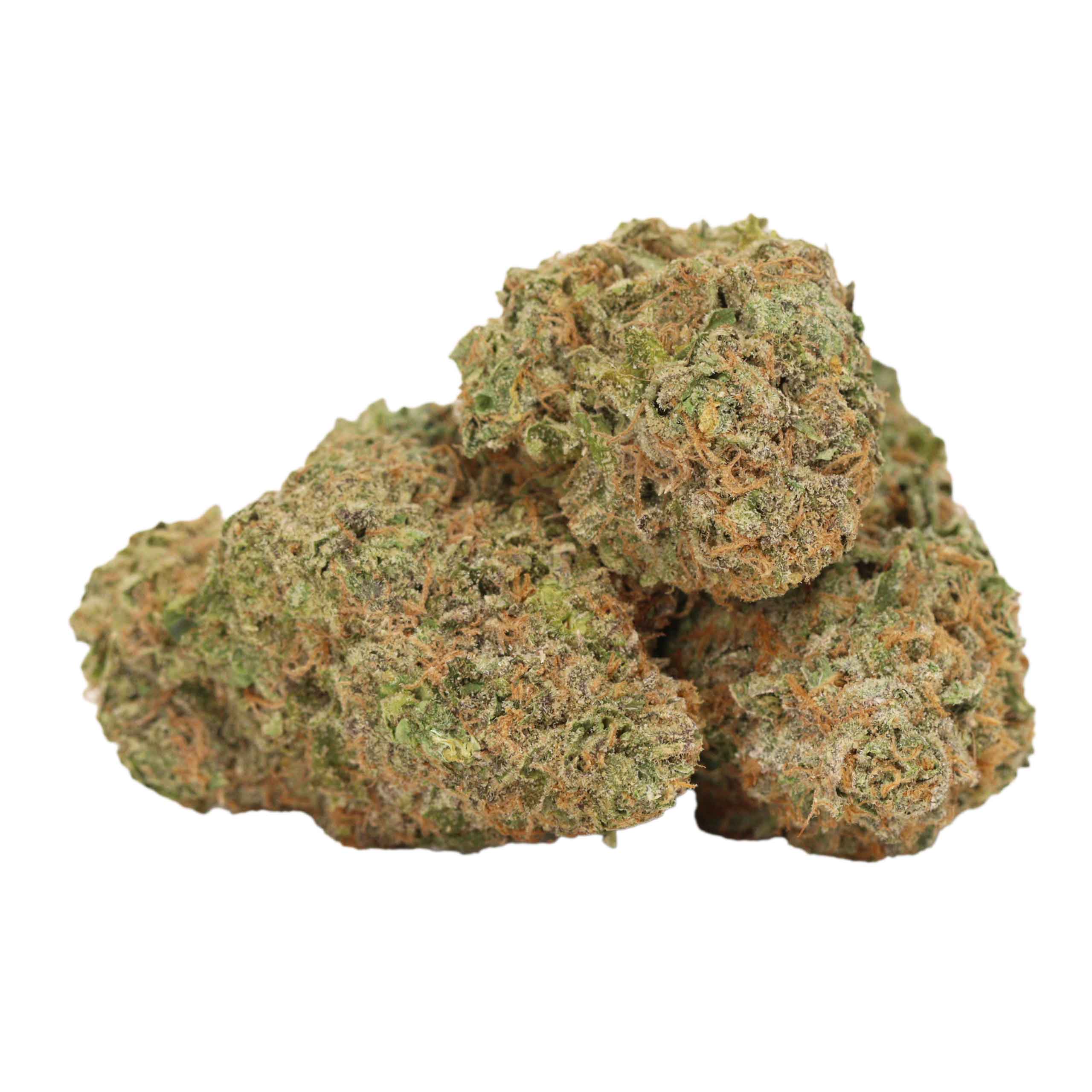
Girl Scout Cookies Kush can create naming confusion because two closely related cannabis names appear in strain databases: GSC (formerly Girl Scout Cookies) and Cookies Kush, which is also called Girl Scout Cookies Kush or GSC Kush.
The distinction matters.
GSC is a famous California hybrid generally associated with an OG Kush subtype crossed with F1 Durban. Current strain information lists approximately 25% THC and 1% CBG, with caryophyllene, myrcene and limonene among its prominent terpenes.
Cookies Kush, meanwhile, is described as a more indica-oriented cross combining GSC with an OG Kush phenotype. Current database information lists approximately 19% THC and 1% CBG, with sleepy, relaxed and tingly among commonly reported consumer effects.
Neither strain should automatically be considered a treatment for neuropathy simply because consumers report pain-related effects.
That distinction becomes particularly important for searches involving THC edibles for neuropathy.
Cannabinoid research suggests some THC-containing formulations may produce modest reductions in certain types of neuropathic pain. However, oral THC products have different onset, duration and dosing characteristics from inhaled cannabis, and research on a standardized cannabinoid medicine cannot automatically establish ordinary dispensary edibles as equivalent treatments.
Girl Scout Cookies Kush also connects naturally to another developing area of cannabis education: cannabis agriculture courses, cannabis growing courses, cannabis agriculture degrees, cannabis farming degrees, online cannabis horticulture education, and professional cannabis certifications.
For additional U.S.-focused cannabis education, readers can explore weedshopusa.com.
What Is Girl Scout Cookies Kush?
The name requires some clarification.
GSC
GSC—formerly widely called Girl Scout Cookies—is one of the most influential modern American cannabis cultivars.
It originated in California cannabis culture and is generally described as an indica-dominant hybrid.
Its ancestry is commonly documented as:
OG Kush-related genetics × F1 Durban
GSC became particularly influential because it contributed genetics to numerous later cultivars.
Cookies Kush
Cookies Kush is also called:
Cookie Kush
Girl Scout Cookies Kush
GSC Kush
Its documented lineage combines GSC with an OG Kush phenotype, producing a more indica-oriented Cookies-family cultivar.
Therefore, someone specifically searching Girl Scout Cookies Kush may be referring to Cookies Kush rather than ordinary GSC.
Girl Scout Cookies Kush at a Glance
| Characteristic | GSC | Cookies Kush / GSC Kush |
|---|---|---|
| Category | Hybrid | Indica |
| Representative THC | ~25% | ~19% |
| Representative CBG | ~1% | ~1% |
| Genetics | OG Kush-related × F1 Durban | GSC × OG Kush phenotype |
| Common effects | Relaxed, hungry, happy | Sleepy, relaxed, tingly |
| Flavor reputation | Mint, sweet, earthy | Sweet, earthy, nutty |
| Major terpenes | Caryophyllene, myrcene, limonene | Limonene, caryophyllene, myrcene |
| Neuropathy treatment proven? | No | No |
| Intoxicating | Yes | Yes |
These figures are representative database values rather than guaranteed chemistry for every batch.
Why the GSC Family Became So Influential
GSC became much more than one cultivar.
Its genetics helped shape an enormous family of modern cannabis varieties.
The Cookies genetic family influenced cultivars associated with:
- Gelato
- Sunset Sherbet
- Thin Mint
- Platinum GSC
- Cookies Kush
- numerous modern dessert hybrids
This influence is one reason “Cookies” appears so frequently in contemporary strain names.
Girl Scout Cookies Kush Aroma
Cookies Kush is generally associated with:
- sweetness
- earth
- nuttiness
- herbs
- spice
- Kush-oriented aromas
GSC itself is particularly famous for minty, sweet and earthy characteristics.
Individual batches can vary considerably.
Girl Scout Cookies Kush Terpenes
Commonly reported Cookies Kush terpenes include:
Limonene
Associated primarily with citrus-oriented aromas.
Caryophyllene
Associated with peppery and spicy aromas.
Myrcene
Associated with earthy and herbal aromas.
These aromatic descriptions do not establish medical effects.
Terpenes are biologically interesting compounds, but commercial claims about specific terpene combinations treating neuropathy should be distinguished from established clinical evidence.
How Strong Is Girl Scout Cookies Kush?
Cookies Kush has a representative THC concentration around 19%, while standard GSC is commonly listed substantially higher, around 25%.
Neither figure is universal.
Actual THC depends on:
- phenotype
- cultivation
- harvest
- curing
- storage
- laboratory methodology
The batch-specific laboratory report is therefore more meaningful than the cultivar’s online average.
Higher THC Does Not Automatically Mean Better Cannabis
THC concentration describes intoxicating potency.
It does not directly determine:
- flavor
- aroma
- freshness
- terpene diversity
- genetic authenticity
- cultivation quality
- medical usefulness
This principle becomes especially important when people search for high-THC products to manage pain.
Increasing THC does not necessarily produce proportionally greater pain relief, while adverse effects can increase.
Girl Scout Cookies Kush Effects
Consumer reports for Cookies Kush commonly emphasize:
- relaxation
- sleepiness
- tingling
- euphoria
- mood changes
Possible unwanted THC effects include:
- dizziness
- dry mouth
- dry eyes
- anxiety
- impaired attention
- impaired coordination
- altered perception
Consumer reviews describe experiences rather than clinical outcomes.
What Is Neuropathy?
Peripheral neuropathy occurs when peripheral nerves become damaged or dysfunctional.
Possible symptoms include:
- burning pain
- tingling
- numbness
- shooting sensations
- unusual sensitivity
- weakness
Neuropathy can result from many different underlying conditions.
Diabetes is one important cause, but infections, injuries, medications and other diseases can also contribute.
This is why persistent nerve symptoms deserve medical evaluation rather than simply choosing a cannabis strain based on reviews.
THC Edibles for Neuropathy
THC edibles for neuropathy are increasingly discussed, but the research needs careful interpretation.
Clinical research has examined cannabinoid products for neuropathic and chronic pain, including THC-containing formulations.
Some systematic evidence indicates small short-term improvements in pain with certain THC-containing products.
However, that does not prove that every THC gummy, brownie, chocolate or other edible works for neuropathy.
The formulation matters.
Edibles vs Inhaled Cannabis
Edible THC behaves differently from inhaled cannabis.
| Characteristic | THC Edible | Inhaled Cannabis |
|---|---|---|
| Onset | Usually slower | Usually faster |
| Duration | Often longer | Generally shorter |
| Dose adjustment | Delayed feedback | Faster feedback |
| Intoxication | Can become substantial | Also possible |
| Neuropathy evidence | Formulation dependent | Limited/formulation dependent |
This slower onset creates an important safety issue.
A person may mistakenly assume an edible has not worked and consume more before the first dose reaches its full effect.
That can lead to unexpectedly intense or prolonged intoxication.
Do THC Edibles Treat Neuropathy?
Current evidence does not establish ordinary commercial THC edibles as a cure for neuropathy.
Research primarily investigates whether cannabinoids can reduce symptoms such as neuropathic pain.
Pain reduction is different from:
- repairing nerves
- reversing nerve damage
- curing diabetes
- eliminating the underlying disease
This distinction is essential.
Are GSC Edibles Proven for Nerve Pain?
No.
Even if an edible is marketed as:
- Girl Scout Cookies
- GSC
- Cookies Kush
- Girl Scout Cookies Kush
the strain name does not establish clinical efficacy.
A clinical trial involving a standardized THC or THC/CBD formulation cannot automatically prove that a GSC-branded edible produces the same result.
The cannabinoid dose and formulation matter more than the colorful strain name.
Potential Problems With THC Edibles
THC edibles can produce adverse effects such as:
- dizziness
- sedation
- anxiety
- confusion
- impaired coordination
- increased heart rate
- prolonged intoxication
These effects can be particularly relevant for people with neuropathy who already experience balance or mobility problems.
THC-containing edibles should also be stored securely away from children and pets.
Cannabis Agriculture Courses
Cannabis has increasingly moved into formal agricultural education.
The phrase cannabis agriculture courses can now describe legitimate university coursework covering areas such as:
- plant biology
- horticulture
- controlled-environment agriculture
- production management
- cannabis chemistry
- regulation
- crop science
Students should still distinguish between university-credit programs, noncredit continuing education and private training certificates.
They are not academically equivalent.
Cannabis Growing Courses
Cannabis growing courses can range from informal internet tutorials to university-level plant-science education.
A strong academic cultivation program may address topics such as:
- plant physiology
- botany
- genetics
- controlled environments
- plant nutrition
- pest management
- production systems
- harvesting
- post-harvest handling
- legal compliance
The educational value depends heavily on who awards the credential and how the program is structured.
Cannabis Agriculture Degree
People frequently search for a cannabis agriculture degree, but many U.S. universities do not award a bachelor’s degree literally titled “Cannabis Agriculture.”
Instead, cannabis education can be incorporated into broader degrees such as:
B.S. in Horticulture
Plant Science
Crop Sciences
Agricultural Sciences
with cannabis-focused courses, certificates, minors or specializations.
For example, Southern Illinois University currently offers a B.S. in Horticulture with cannabis-related academic options, including a Cannabis Production Systems undergraduate certificate and Cannabis Science and Production Horticulture specialization.
This is an important distinction when comparing credentials.
Cannabis Farming Degree
A cannabis farming degree is another common search phrase rather than necessarily the formal title printed on a university diploma.
Someone interested in professional cannabis cultivation may benefit from studying:
- horticulture
- crop science
- plant biology
- agricultural science
- controlled-environment agriculture
and adding cannabis-specific coursework.
A broader agricultural degree can also provide knowledge applicable beyond one crop.
Cannabis Horticulture Degree Online
Students searching for a cannabis horticulture degree online should carefully examine whether the program is actually:
- a degree,
- an undergraduate certificate,
- a graduate certificate,
- a noncredit certificate, or
- private professional training.
These terms are not interchangeable.
The University of Illinois, for example, currently offers an online Cannabis Production & Management undergraduate certificate consisting of 11 credit hours.
That is a university credential, but it is still a certificate rather than a bachelor’s degree specifically titled Cannabis Horticulture.
University Cannabis Education Examples
As of 2026, legitimate academic options demonstrate how cannabis has entered formal horticulture and crop-science education.
| Institution | Example Program | Credential Type |
|---|---|---|
| Southern Illinois University | Cannabis Production Systems | Undergraduate certificate |
| University of Illinois | Cannabis Production & Management | Undergraduate certificate |
| UC Riverside Extension | Cannabis Agriculture & Horticulture | Online certificate |
| LSU Cannabis Studies | Cannabis Agriculture & Horticulture | Online certificate |
Program availability, curriculum and tuition can change, so prospective students should verify current information directly with the institution.
Cannabis Agriculture vs Horticulture
Agriculture is the broader field.
It can include:
- crop production
- soil science
- agricultural economics
- machinery
- sustainability
- farm management
Horticulture focuses more specifically on intensively cultivated plants.
For cannabis production, horticultural knowledge can be particularly relevant because commercial cultivation frequently involves sophisticated environmental management.
What Should a Cannabis Agriculture Program Teach?
A credible program should emphasize science rather than simply cannabis culture.
Important areas can include:
- botany
- plant physiology
- genetics
- soil and growing media
- integrated pest management
- plant pathology
- environmental control
- crop nutrition
- post-harvest science
- regulatory compliance
Students interested in long-term agricultural careers may benefit from programs that teach transferable plant-science skills.
Cannabis Agriculture Certificate vs Degree
| Feature | Certificate | Degree |
|---|---|---|
| Typical length | Shorter | Longer |
| Academic breadth | More focused | Broader |
| Cannabis specialization | Often high | May be part of larger major |
| General education | Usually limited | Usually substantial |
| Credential terminology | Certificate | Associate/Bachelor’s/Master’s |
| Should they be treated as identical? | No | No |
A certificate can still provide useful education, but marketing language should accurately identify the credential.
Master of Cannabis Certification
The phrase Master of Cannabis Certification can refer to a private professional training credential.
It should not automatically be confused with a master’s degree from an accredited university.
A master’s degree generally involves graduate-level academic admission, university credit and an officially awarded graduate degree.
A professional certification can have a different purpose.
When comparing programs, prospective students should ask:
- Who awards the credential?
- Is it university credit?
- Is it noncredit continuing education?
- Is the institution accredited?
- How many academic credits are earned?
- Does the credential lead into a degree?
- What does the transcript actually call the program?
The exact credential matters more than the word “master” in its marketing name.
Cannabis Education and Legal Cultivation
Completing a cannabis horticulture course does not itself authorize someone to cultivate marijuana.
Cultivation laws vary by jurisdiction.
Rules can differ for:
- commercial cultivation
- medical cultivation
- adult home cultivation
- plant limits
- licensing
- zoning
Agricultural knowledge and legal authorization are separate issues.
Why Controlled-Environment Agriculture Matters
Cannabis education also overlaps with the rapidly growing field of controlled-environment agriculture.
Skills in areas such as:
- greenhouse management
- environmental monitoring
- plant nutrition
- irrigation
- crop protection
can apply to many high-value crops beyond cannabis.
This can make a horticulture or crop-science education more broadly useful than an extremely narrow cannabis-only credential.
For more U.S.-focused cannabis terminology and research education, readers can explore weedshopusa.com.
Girl Scout Cookies Kush and Medical Claims
GSC and Cookies Kush are sometimes discussed by consumers in relation to pain.
Those reports should not be treated as clinical proof.
Research on neuropathic pain generally evaluates cannabinoids or standardized preparations rather than establishing individual commercial strains as medicines.
Therefore:
Cannabinoid evidence ≠ proof that Girl Scout Cookies Kush treats neuropathy.
That distinction protects readers from overstating what current research actually demonstrates.
Cannabis, Neuropathy and Driving
THC can impair:
- attention
- coordination
- reaction time
- judgment
- perception
People using THC for pain should not drive while impaired.
The fact that cannabis is being used for symptom management does not eliminate its intoxicating effects.
Educational Resources
For the documented strain profile, genetics and representative cannabinoid information, see Leafly’s GSC strain profile.
For peer-reviewed research concerning cannabinoids and neuropathic pain, explore PubMed’s cannabinoid and neuropathic pain literature.
For an example of formal U.S. university cannabis-production education, review the University of Illinois Cannabis Production & Management Certificate.
For additional U.S.-focused cannabis education, readers can explore weedshopusa.com.
Frequently Asked Questions
1. What is Girl Scout Cookies Kush?
Girl Scout Cookies Kush commonly refers to Cookies Kush/GSC Kush, an indica cultivar combining GSC with OG Kush genetics. It should be distinguished from ordinary GSC, which has its own established identity.
2. Are THC edibles good for neuropathy?
Some THC-containing cannabinoid formulations have shown small short-term benefits for neuropathic pain, but evidence does not establish ordinary commercial THC edibles as universal neuropathy treatments. THC can also cause dizziness, sedation and other adverse effects.
3. Can you get a cannabis agriculture degree?
Cannabis-specific degrees remain less common than broader horticulture, plant-science and agricultural degrees. Some universities instead offer cannabis production certificates, minors or specializations within established academic disciplines.
4. Can you study cannabis horticulture online?
Yes. Several universities offer online cannabis horticulture, production or agriculture certificate programs. Students should verify whether a program awards university credit, continuing-education credit or a private certificate.
5. Is a Master of Cannabis Certification the same as a master’s degree?
Not necessarily. A professional certification using “Master of Cannabis” terminology should not automatically be interpreted as an accredited graduate master’s degree. Students should verify the awarding institution, academic-credit status and exact credential.
Where to Explore Further
Readers researching Girl Scout Cookies Kush, cannabinoids and cannabis education can explore weedshopusa.com alongside current university and scientific resources.
For cannabis agriculture courses, cannabis growing courses, cannabis agriculture degree, cannabis farming degree, cannabis horticulture degree online, and Master of Cannabis Certification, verify the exact credential before enrolling. A certificate, specialization and academic degree can all be valuable, but they are not the same qualification.
Final Thoughts
Girl Scout Cookies Kush sits within one of the most influential genetic families in modern cannabis.
The terminology deserves precision: ordinary GSC is commonly associated with OG Kush-related and F1 Durban genetics, while Cookies Kush/GSC Kush combines GSC with additional OG Kush genetics.
The medical terminology deserves equal care.
Research suggests certain THC-containing cannabinoid formulations can provide modest short-term relief from neuropathic pain for some patients, but that does not establish THC edibles for neuropathy as universally effective or prove that Girl Scout Cookies Kush itself treats nerve damage.
Cannabis education is evolving as well.
Students can now find legitimate cannabis agriculture courses, cannabis growing courses, university certificates and cannabis-focused horticulture specializations. But prospective students should distinguish a true academic degree from an undergraduate certificate, noncredit course or private professional certification.
That combination of accurate genetics, careful interpretation of medical research and precise educational terminology provides a much stronger understanding of modern cannabis than relying on strain names or marketing claims alone.
Be the first to review “Girl Scout Cookies kush”
Related products
hybrid
hybrid
hybrid
hybrid
hybrid
hybrid
hybrid
hybrid
Reviews
There are no reviews yet.